 Sylwia
 Which came first, the chicken or the egg? Even Aristotle himself supposedly pondered this question. Unfortunately, he didn’t find a definitive answer—otherwise, scholars wouldn’t still be debating it today. So we left the deep philosophical questions to the experts and focused instead on equally tricky questions about the egg itself. Can an egg fit through the narrow neck of a bottle? How does it react when placed in vinegar, coffee, or cola? Unlike Aristotle, we actually found answers to our questions! Here’s a roundup of egg-citing experiments to try with your little scientists.
Spinning Eggs: A Celestial Experiment
We kicked off our quasi-scientific studies with two eggs—one raw and one boiled—and a lot of questions. The kids eagerly tested which egg was heavier, whether they were the same size, and if shaking them produced any sound. They were so busy experimenting that they forgot to write down their results—so you’ll have to test that part yourself!
We ended our first series of experiments with an egg race. The rules are simple: say, “Ready… set… spin!” and spin the eggs. See which egg spins faster and longer. Don’t forget to jot down your observations! And if one egg “accidentally” falls off the table, no worries—you can just move straight on to the next experiment.

How to Separate an Egg Yolk from the White
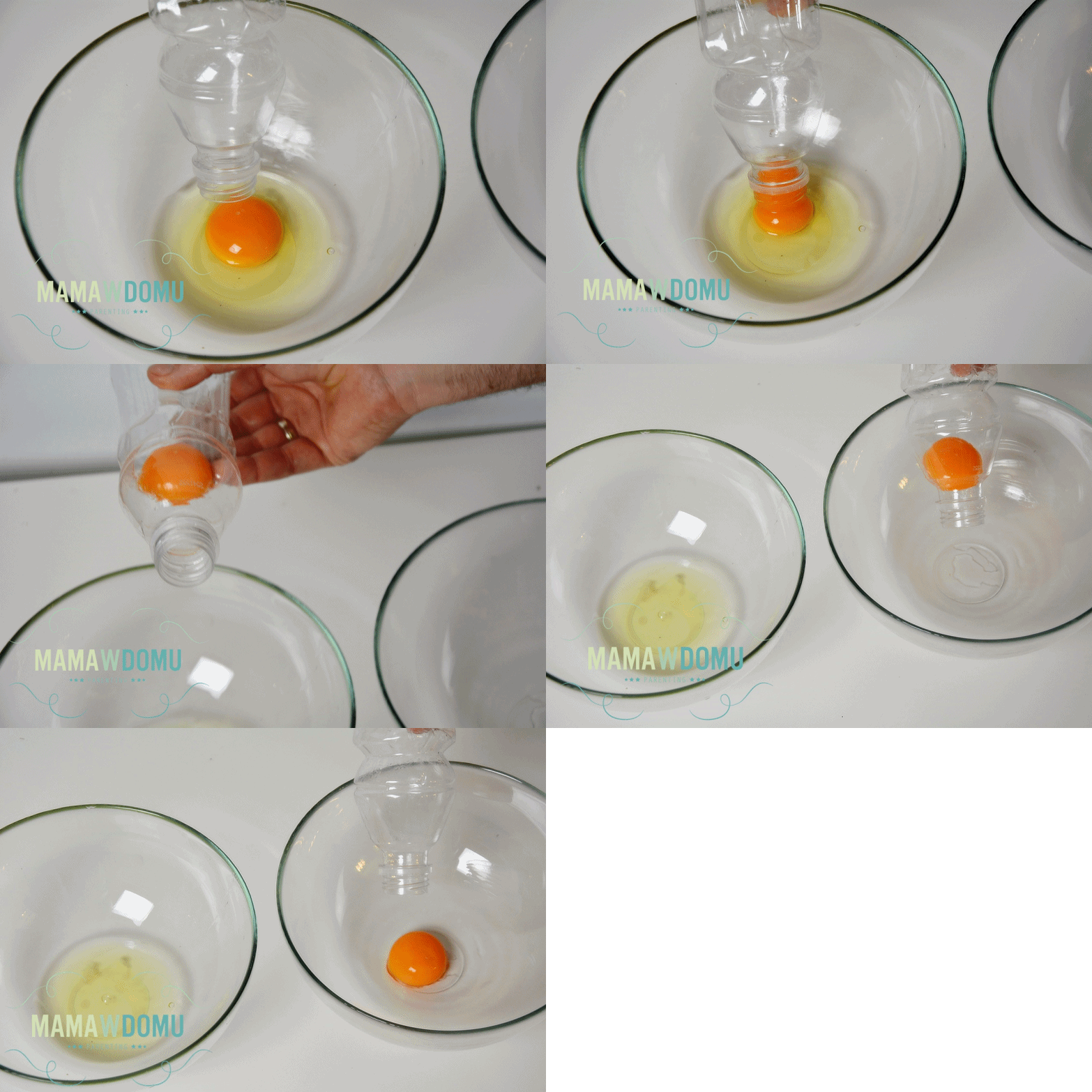
Cracked eggs come in handy for this classic experiment. You’ll need a plastic bottle. Hold the bottle over the yolk, gently squeeze it to release the air, and then lift—the yolk gets sucked into the bottle! Transfer it carefully into another bowl. This task might sound tricky, but once you try it, you’ll see how easy it is. Kids love it, and it’s also a great fine motor exercise.
The Egg in a Bottle Trick
Next, we used a boiled egg from our first experiment. After peeling it, we tried to push it into a glass bottle—unsuccessfully. The kids thought it couldn’t be done. But they were wrong! A simple match inside the bottle creates a little magic, and the egg slips right in. No, it’s not magic—it’s physics! For a full explanation and a video from a few years back, check our link. Now we’re still figuring out how to get the egg back out!

Floating Egg in Saltwater
We wanted to see if an egg could float. Using a regular chicken egg, it initially sank. So we added salt—lots of it (10 tablespoons in total)—and tried again. This time, the egg floated beautifully near the surface. A lesson in careful pouring: if you add water too quickly, the egg sinks again. For more experiments with saltwater (and a few other “victims”), check the link here.

Eggs and Teeth: A Calcium Connection
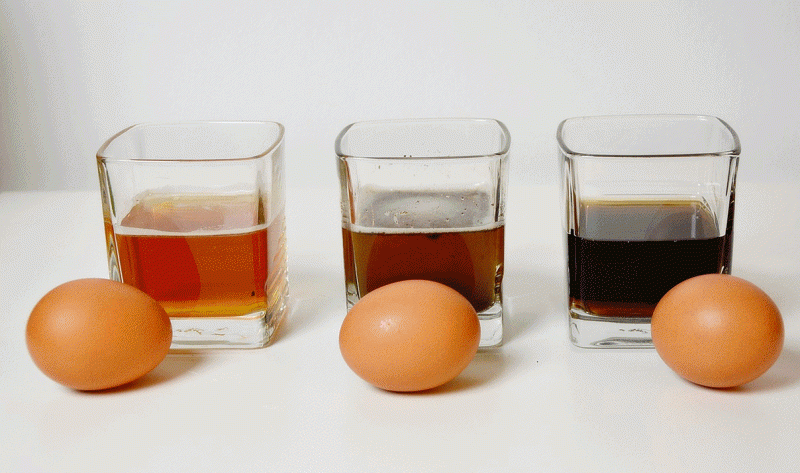
Eggshells, like teeth, are rich in calcium. To see what happens to teeth when exposed to cola, tea, or coffee, we submerged raw eggs in these drinks. After 24 hours, the results were shocking! Stains and discoloration covered the shells. Needless to say, we all ran to brush our teeth—even though we hadn’t drunk any of those beverages that morning.

Egg in Vinegar: A Peek Inside
We took a closer look at the egg by submerging it in vinegar. After 24 hours, the shell dissolved, leaving the egg soft and translucent. Kids could now observe the egg’s inner structure—or even gently toss it around! Curious how that turned out? Check out the full story in our link.

Nail Polish Marbling: Art Meets Science
Finally, we got a little creative. Too lazy to hunt for paintbrushes, we poured nail polish into a bowl of water. Dipping eggs in the mixture created shiny, marbled patterns—but also a strong chemical smell. If you want to try this at home, we’ve included detailed instructions in the link.

We also considered one last experiment: walking on eggs. Legend says some people have walked across rows of eggs without breaking them. We decided to skip this one—for now, anyway—because every Easter egg is precious, and we didn’t want to upset our friendly hen, Nioska!
Disclaimer: No hens or chicks were harmed during these experiments. Special apologies to Nioska for using her eggs for science instead of breakfast. We promise, future generations of scientists will thank her!